
The Engine That Runs Your Service
The Run Guide Your PSA Forgot To Give You
A comprehensive 10-module certification program that gives your team every rule, workflow, and standard the IT Service Run Guide™ (ITSRG) runs on – the complete operating manual for running an IT service desk like a machine, not on heroics. For teams from 1–100+. It fully scales.
OVERVIEW
Why the ITSRG Exists
The Machine, Not the Heroics
ITIL provides you with a strategic framework. It doesn't tell you how to lay out your service boards, what statuses to use, when to escalate, or what a quality ticket looks like. The IT Service Run Guide™ (ITSRG) is Manny Palachuk's answer to that gap – the engine block of day-to-day service delivery. It's the engine that runs your service, whether or not you ever layer Agile methods on top of it.
Built for Teams from 1–100+
The ITSRG is a practical, immediately implementable starting point – no ITIL maturity required – with a clear evolutionary path toward ITIL as the organization grows. It fully scales: the same four-domain framework runs a two-person help desk and a hundred-person service organization. This is the same architecture Manny uses inside live coaching engagements.
YOUR INSTRUCTOR
About Manny

Manny Palachuk...
... has nearly 40 years of business, management, and training experience in the computer and electronics industries. Manny has owned several successful businesses, managed IT and MSP service companies, and coached or mentored many more around the world. Manny is a thought leader on Agile as applied to business strategy and service delivery, and he is a well-known speaker and trainer on these subjects at industry conferences and in the IT community.
Author of Getting To The Next Level: A Blueprint For Taking You And Your Business To The Top, co-author of The Network Migration Workbook, and currently writing The Culture Imperative.
THE ENGINE METAPHOR
Every Rule, Every Workflow, Every
Standard – One Engine
Four domains. One connected system: Standards & Definitions, Operational Workflows, Team Structure & Coverage, and System Configuration.
THE ENGINE ...

... THAT DRIVES YOUR SERVICE
COURSE OBJECTIVES
What Your Team Walks Away Able To Do
- Architect the operational engine – a repeatable, reproducible, reliable baseline service delivery process, whether or not Agile is ever applied on top of it.
- Establish core discipline with the Ten Golden Rules of PSA™ – all work against a ticket, closed-loop communications, daily blocking and tackling.
- Capture accurate time data – work and track time in real-time, eliminating timecard gaps, overlaps, and duplicate entries.
- Define the structural landscape – Help Desk, Support Desk, and NSOC properly segregated by purpose.
- Standardize workflows – statuses, priority levels, and issue types so every ticket follows the same predictable path.
- Map escalation and de-escalation as a disciplined process – not as a judgment call made under pressure.
- Implement Service Coordination – the "air traffic controller" role that removes roadblocks and keeps tickets complete and accurate.
- Measure empirical performance – CSAT, Backlog, Lead Time, Cycle Time, and Ticket Count, prioritized over raw utilization.
AUDIENCE
Who This Course Is Intended For
Core Audience
- Service Managers and Service Coordinators
- Service Dispatchers and Project Managers
- Help Desk, Field Service, and NSOC technicians (Tier 1–4)
- MSP owners and department heads accountable for service delivery
Also Built For
- Process owners with no practical starting point for structured service delivery
- Consultants who need a working competency in the ITSRG framework
- Internal IT teams as well as external MSPs
- Anyone tired of running a service desk on heroics instead of a system

LEARNING MATERIALS
How It's Structured
- Nine certification modules, each with Mission Briefing, instructional lessons, mini-quizzes, a Final Module Quiz, a synthesis lesson, and an Implementation Lab for whoever owns the rollout.
- Slide deck workbook for every lesson, for note-taking and question cultivation.
- Downloadable SOPs, checklists, scorecards, and flowcharts (Priority Framework, Escalation Stages, Ticket Status Workflow, Board Coverage Matrix, and more).
- The ITSRG Implementation Scorecard – the master checklist your team works against module by module.
- Access to the ITSRG Masterclass AI assistant (Manny AI) to answer questions and guide you on your learning journey.
- 6 months of access to work through the material at your own pace. If you need more time, just ask — we'll extend it, no questions.
Note: Most students tackle one Module per week and finish inside of 10 weeks.
THE TOOLKIT
What You Can Actually Use
Module 2 — Kick-Start – Orientation & Getting Everyone On Board
- Getting Everyone On Board Poster
- Ten Golden Rules™ Poster
- SOP 004 — How to Document Any Process (White Paper / seed document)
- SOP 005 — Quality Ticket Defined
- Ten Golden Rules™ Scorecard Spreadsheet
- ITSRG Implementation Scorecard Spreadsheet
Module 3 — Ten Golden Rules of PSA & Ticket Systems™
- Ten Golden Rules™ Poster
- Ten Golden Rules™ Scorecard Spreadsheet
- SOP 005 — Quality Ticket Defined (cross-referenced from Module 1)
Module 4 — Working and Tracking Time in Real-time
- WaTTiRt Maturity Level Evaluation Worksheet
- Working and Tracking Time in Real-time White Paper
- Technician's Day Workflow Chart
- Flow of a Ticket Flowchart
Module 5 — Service Delivery Framework
- Statuses SOP Poster
- Priority Levels SOP Poster
- Work Types SOP Poster
- Issue Types SOP Poster
- Service Desk Board/Queue Constraints Chart
Module 6 — Service Delivery Workflows
- Flow of a Technician's Day Poster
- Flow of an Opportunity Poster
- Flow of a Widget Poster
- Board Coverage Matrix Template
- User Story Template Card
Module 7 — Escalation & De-escalation
- WINS Decision Sequence Poster
- Boundaries, Triggers & Stops Reference Sheet
- Time Limit Leeway Table
- After-a-Stop Decision Card
Module 8 — Service Coordination
- Distributed Service Coordination Process White Paper
- Service Coordinator Sweep Checklist
- Scope of Focus & Depth Matrix
- Common Issue Best Practice Matrix
- Board Coverage Matrix Template (shared with Module 5)
- Common Client Phrases Reference
Module 9 — Metrics That Matter & The Value Proposition
- Service Delivery Backlog Report and Metrics Spreadsheet (12-week rolling efficiency, lead time, cycle time, ticket counts, plus a “Heads Up” weekly view)
- Client Effective Hourly Rate Calculator
- Formula Reference Card (Backlog-in-Days, Capability, SLA staffing formulas)
Module 10 — Technical Debt & The Nebulous Blob™
- Nebulous Blob™ Scatter Chart (self-populating spreadsheet)
- Nebulous Blob™ White Paper
BONUS Module — Agile Service Delivery™ Primer
- The Agile Manifesto for IT Service Operations
- Agile Reading List — "Must haves" for your library

Inside the IT Service Run Guide™ Masterclass
Inside the IT Service Run Guide™ Masterclass: over 120 lessons covering everything from onboarding your team to running the daily ops, with modules on metrics, backlog discipline, technical debt — all mapped directly to your Service Desk.
Every lesson includes a comprehension assessment, so progress means something. And if you get stuck, the Ask Manny AI — trained on Manny's comprehensive IT Service Run Guide™ methodology — is built right into the course, so you get direct answers grounded in the framework itself, not generic AI guesswork.
This isn't a video library. It's an operational system you work through, module by module, until it's how your team actually runs.

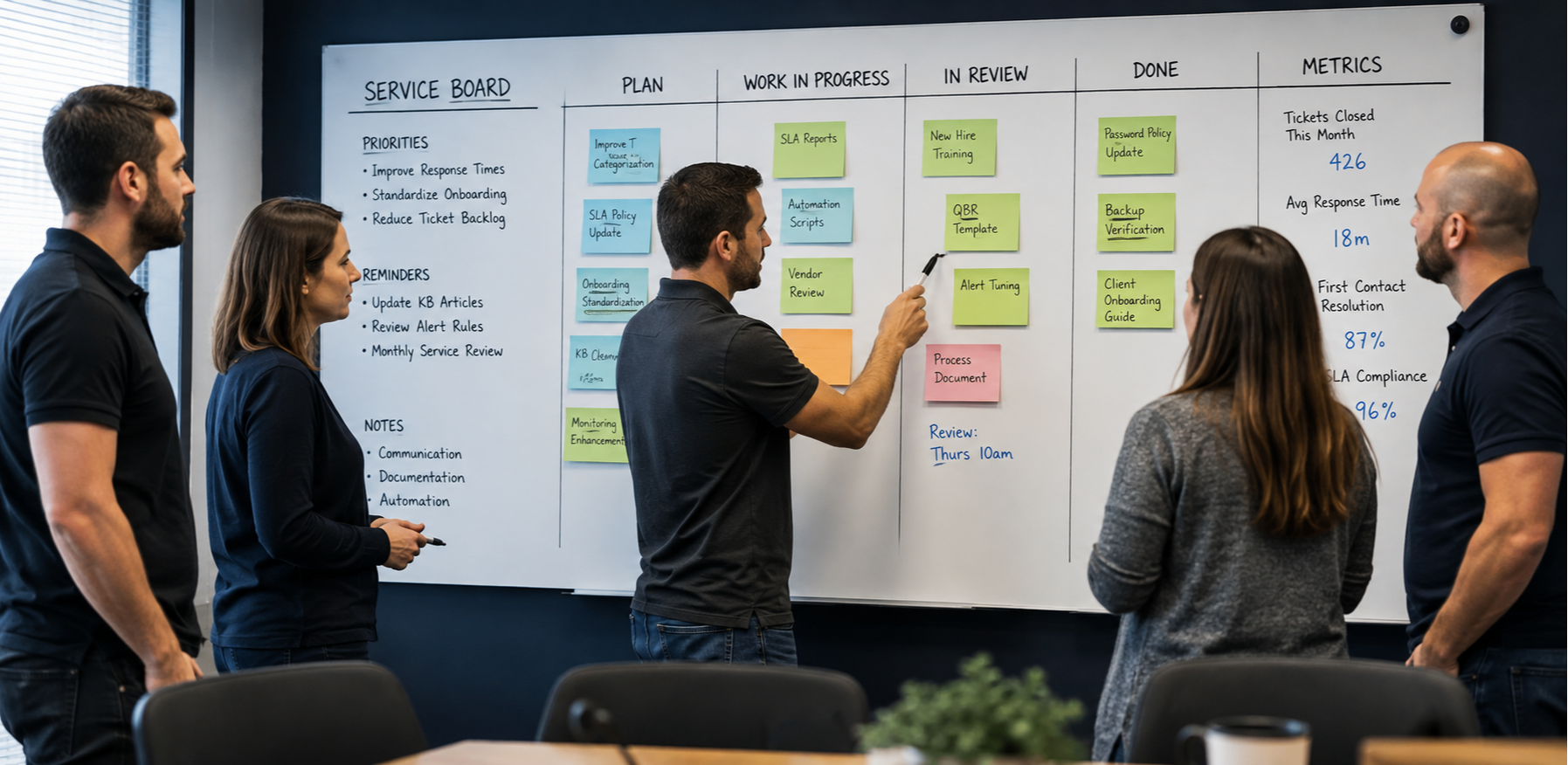
A GLIMPSE OF WHAT THE MACHINE TRACKS
The Metrics ITSRG Runs On
Reliable Metrics To Run Your Service Delivery

SOCIAL PROOF
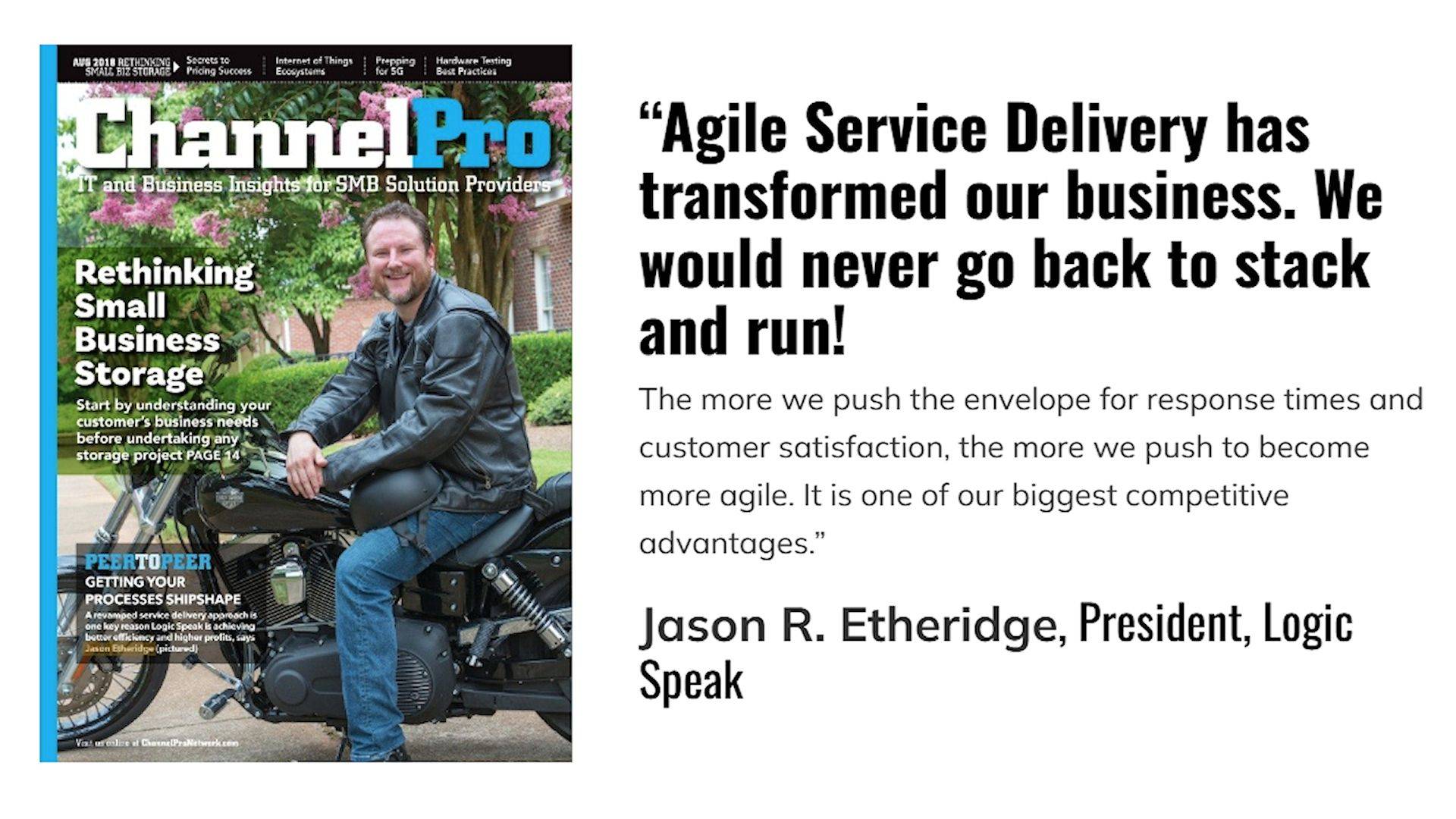
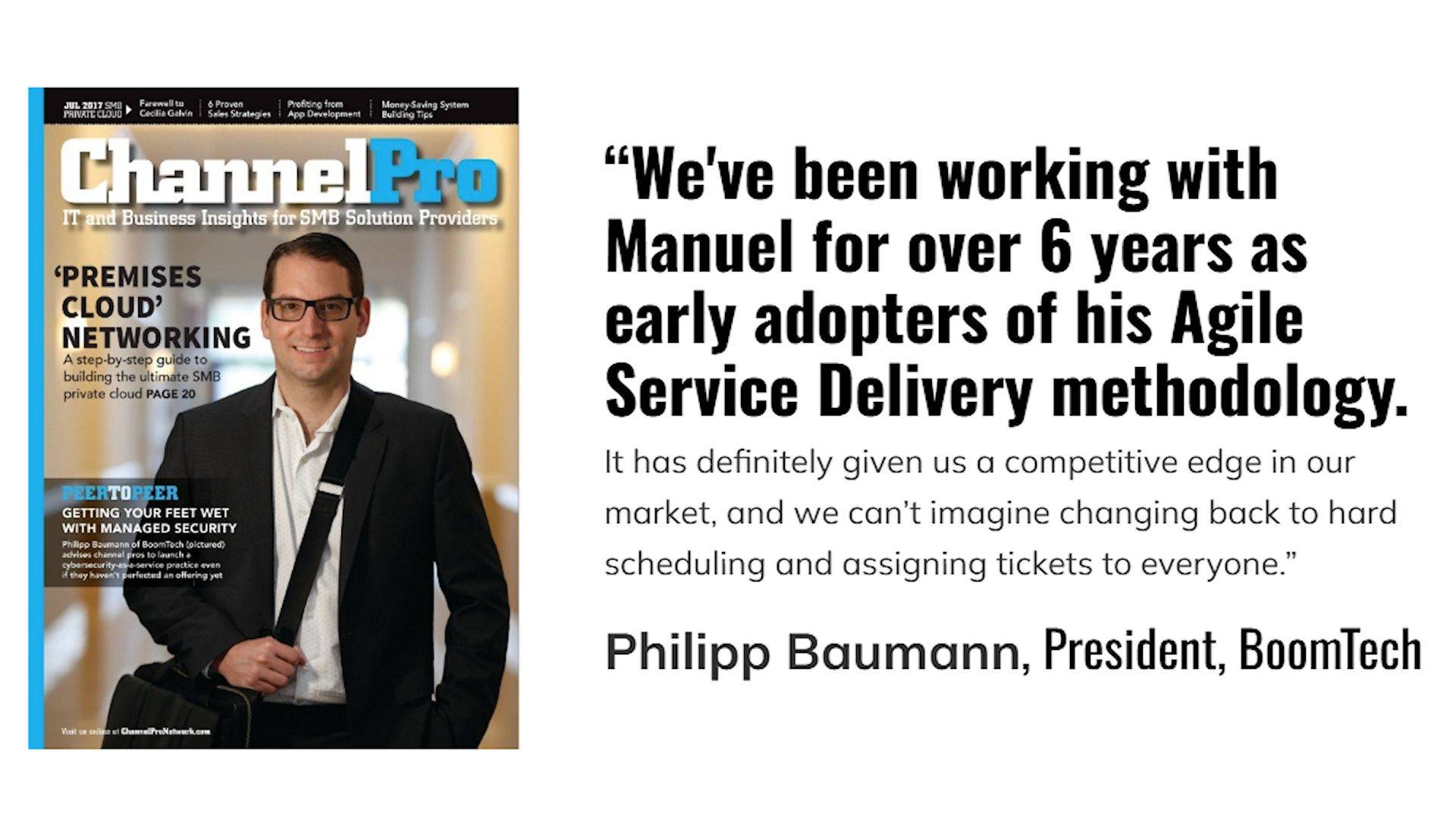
What Teams Say After Running The Machine
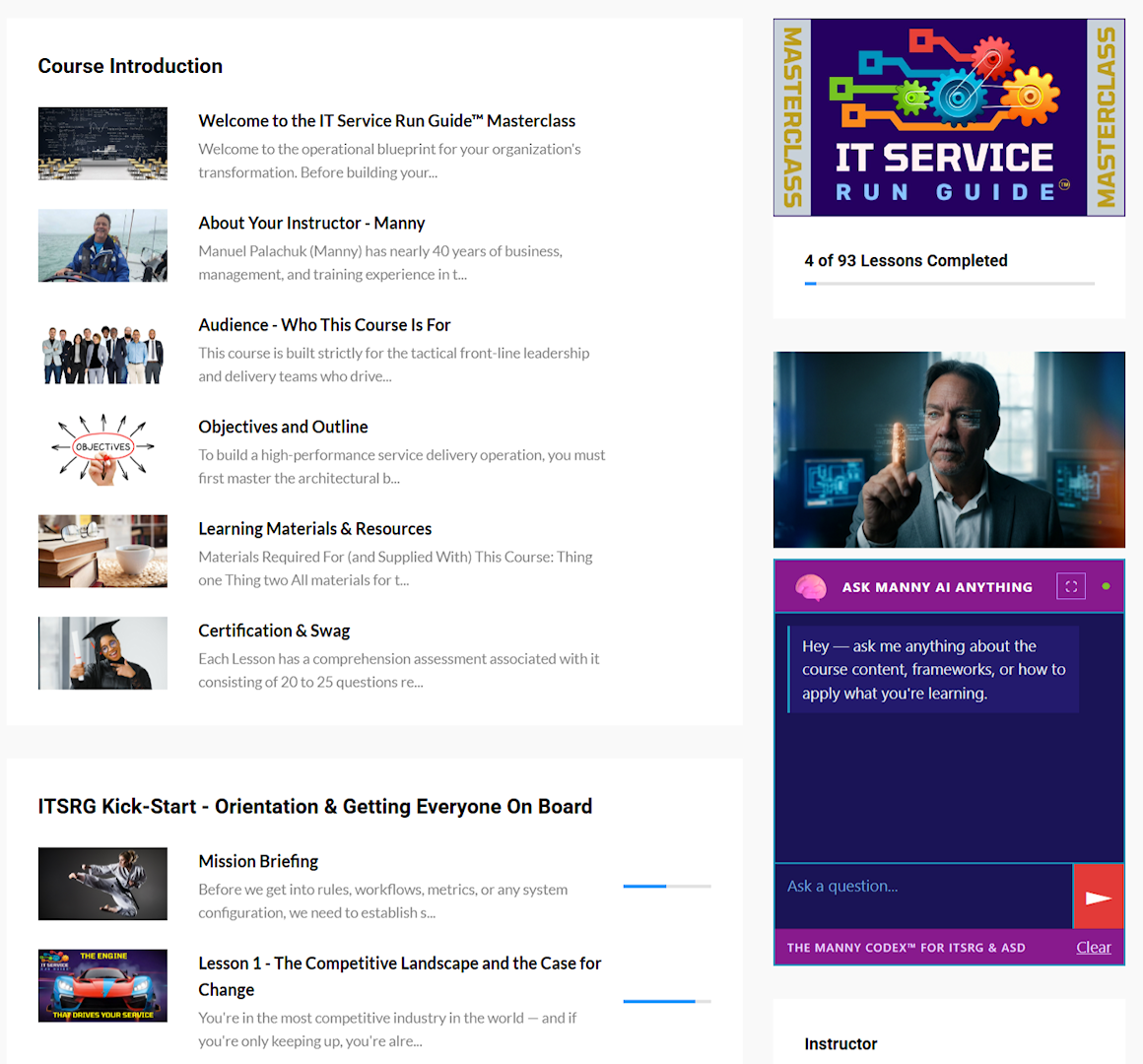
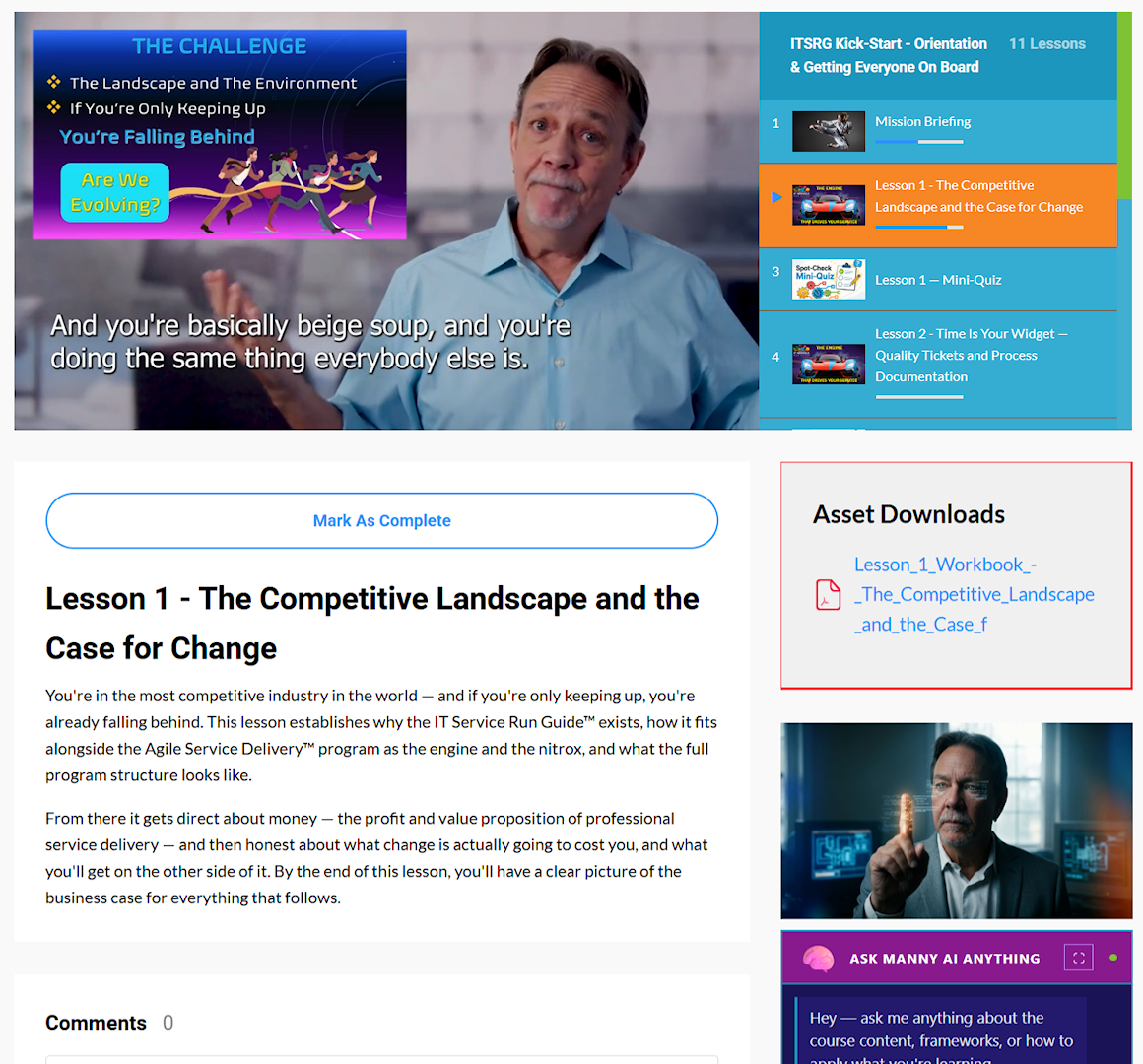
Every Lesson, Fully Equipped
Breadcrumb navigation keeps you oriented at every step — one click back to the module or the course home — so that the more than 120 lessons never feels like a maze.
Each lesson plays through synced video, slides, and subtitles, backed by a full written lesson detail so the concept doesn't just pass by once and disappear.
The Mission Briefing lesson sets the stage for every module before you dig in. And once you've worked through the core lessons, the Resources, Assets & Homework lesson gives every learner the templates and reference material to put it into practice.
The Implementation Lab goes further, built specifically for the people who own the rollout: Service Managers, Service Coordinators, and Team Leads driving the change on the floor.
This isn't a course you sit through. It's a system you build alongside, lesson by lesson, until it's how your team actually runs.
THE COURSE STRUCTURE
IT Service Run Guide™ – Course Introduction Plus 9 Core Modules
MODULE 1

Course Introduction
Your orientation to the entire Masterclass — instructor, audience, objectives, and the hard-gated path to certification, all in one place. Consider it the phase where we clear the deck, eliminate the noise, and prepare your team to run with the big dogs.
- Welcome to the IT Service Run Guide™ Masterclass — the operational blueprint for your organization's transformation
- About your Instructor — Manny's 40 years in business, management, and training, and his Getting To The Next Level© framework
- Audience — who this course is built for and the mindset it requires
- Objectives and the full structural outline of the course, lesson by lesson
- Learning materials and resources supplied with the course
- Certification & Swag — 80% hard-gated passing standard for every lesson
MODULE 2

ITSRG Kick-Start: Orientation & Getting Everyone On Board
This module is the commitment ceremony before the technical work starts — the why behind the IT Service Run Guide™ (ITSRG), the profit-and-value case for building it, and the ten-point behavioral countdown that gets your team on board before friction hits.
- Establishes the profit and value proposition of a professionally run service desk, and introduces “time is your widget” — the concept that anchors every metric taught later in the course
- Walks through the real cost of change (friction, pushback, possibly losing a tech who won't adapt) alongside the dividends (higher CSAT, efficiency, cash flow, and profit)
- Introduces Rule #1 of Service Delivery — just take care of the customer — as the overriding principle that governs every other rule in the program
- Delivers the ten-point “Getting Everyone On Board” behavioral countdown your team runs on during implementation, plus the “brilliant idiot” concept — why raw technical skill doesn't excuse resistance to the new methodology
- Lays out the five-step Steps to Success framework: believe it's possible, document your processes, set new ticket-system rules, assign a Taskmaster, and commit to CI² (Continuous Incremental Improvement)
MODULE 3

Ten Golden Rules of PSA and Ticketing Systems™
Twenty-five years of hard-won operational discipline distilled into ten non-negotiable rules — the foundation every metric, report, and performance conversation in this course depends on.
- Covers all Ten Golden Rules™ by name and number, from "all work is performed against a ticket" through "do not give the customer false hope," with the specific operational reason each one exists
- Introduces WINS (What Is Next Step?) — the client-visible sentence that closes every unresolved ticket and lets any qualified technician pick up and move work forward
- Establishes the "three days out" scheduling rule as the primary control valve for keeping ticket flow predictable and technicians from getting blindsided
- Defines GIWAAR (Got It, Will Assimilate And Respond) as the closed-loop communications standard behind Rule #9
- Explains why Rules #9 and #10 — quality communications and never giving false hope — are the ones that look easiest on paper but are hardest to execute consistently under pressure
MODULE 4

Working and Tracking Time in Real-Time (WaTTiRt)
The financial and behavioral foundation of the whole system: if time isn't tracked in real-time, every metric downstream is a guess, not a measurement.
- Makes the business case with real numbers: a five-tech team at full efficiency represents a theoretical $4M+ annual profit-and-value ceiling — one that only exists if every hour is actually tracked
- Introduces the five-level maturity model for time-tracking discipline, from Level 1 (scattered, next-day entries) to Level 5 (real-time, zero interruption-driven redirects)
- Explains the human element behind the discipline — why task-switching and emotion, not laziness, are what break time tracking, and why process is the container that makes consistency possible despite that
- Defines the tracking-increment rules: five-minute increments for help desk and rapid response, fifteen-minute for field and travel — and why tracking increment and billing increment are configured separately
- Provides a 30-day implementation path: baseline assessment, a go-live date, a zero-tolerance date, and daily Taskmaster review of every time card during rollout
MODULE 5

Service Delivery Framework
The architectural blueprint for where work lives: the three boards, the ticket taxonomy, and the 17-status flow that turn raw tickets into trustworthy data.
- Defines the “two businesses under one roof” model — Professional Services as a profit center, the Service Desk as a cost center — and the Change Management workflow that keeps one from quietly subsidizing the other
- Maps the three service boards: Help Desk (interrupt-driven, 30–45 minute cap), NSOC (Network & Security Operations Center — remote, 24/7, no client-facing contact), and Support Desk (the escalation destination with full resources)
- Establishes the ticket taxonomy — Ticket Type, Work Type, and Issue Type — as the classification system every future metric depends on
- Defines the four-level priority scale (P1–P4), with every ticket defaulting to P4 until a human overrides it
- Lays out the full 17-status ticket lifecycle, from New/Escalated through Completed/Closed, so any board can be read at a glance without asking a question
MODULE 6

Service Delivery Workflows
Takes the boards and taxonomy from the last module and puts tickets in motion — the flow of a technician's day, an opportunity, a device, and a report.
- Introduces the user story format (“as a [who], I want [what], because [why]”) as the foundation of every client interaction, and the standard for confirming you actually understood the request
- Walks through the intake phone tree and script, and how every human-generated ticket resolves into a Service Request, Incident, or Change Request
- Defines the “Flow of a Technician's Day” — check voicemail and email, confirm scheduling, qualitize the board, then work it in priority order — as the repeatable loop every shift runs on
- Distinguishes an opportunity (something a client wants that doesn't exist yet) from a ticket, and shows how it moves through Change Management before a ticket is ever created
- Introduces the coverage matrix (primary, secondary, tertiary) so board coverage never depends on one person being available
MODULE 7

Escalation & De-escalation
The decision framework for exactly when to escalate, when to de-escalate, and when to simply stop — so hours never get burned on work nobody asked for.
- Maps the escalation path (Help Desk and NSOC both escalate to Support Desk; Support Desk can de-escalate back to either) and defines what escalation actually means: moving work to wherever the resources are
- Introduces the WINS decision sequence before escalating: Phone a Friend, then Ask the Audience, then an 80/20 best guess, then log notes and escalate
- Defines the six Stop categories — Time Boundary, Access, Skill Level, Approval Required, Interaction Requirements, and Resources/Wait Cycle — and what happens after each one (reschedule, abandon, or redirect)
- Covers priority de-escalation rules: a ticket's priority only drops once impact is reliably contained, never just because a fix is already known
- Explains mentoring down and the kickback rule, including the hard 45-minute ceiling on tickets returning to Help Desk
MODULE 8

Service Coordination
The role, the routines, and the daily rhythm that keep the whole system honest — what stops every board from quietly filling with stale, inaccurate tickets.
- Defines the Service Coordination role as an expediter and air traffic controller — minimizing constraints and removing roadblocks, not micromanaging technicians
- Establishes the Quality Ticket standard and “qualitizing” — bringing every new ticket up to a verified standard (problem description, contact info, device, agreement, priority, status, estimate) before anyone works it
- Lays out the fixed sweep order — NSOC first, then Help Desk, then Support Desk, then Mini-Projects — and explains why that sequence is non-negotiable
- Defines each role's scope in the sweep: Service Manager and Service Coordinator run the full routine series, Team Leads and Board Leads run partial versions, technicians qualitize only
- Covers the daily standup structure (5–10 minutes, bench status and hot items only) and the role of pre-documented common client phrases in keeping communication consistent under pressure
MODULE 9

Metrics That Matter & The Value Proposition
Every hour a technician works produces either profit or value — this module is how you actually measure which one, using real formulas instead of gut feel.
- Draws the line between a KPI (what you manage to — Customer Satisfaction, Lead Time, Cycle Time, Work in Progress) and a metric (what you tune with — Utilization, Efficiency, Backlog), using the speedometer analogy, and warns against chasing vanity numbers like Kill Rate or treating an SLA as a guarantee
- Defines Project Backlog (planned, revenue-generating) versus Service Backlog (unplanned, agreement-driven value), and why both count as technical debt the moment they sit unresolved
- Gives the exact formulas for Team Capacity, Team Capability, and Team Utilization, and shows why Utilization doubles as a built-in check on whether your own time data can be trusted
- Distinguishes Lead Time (the full clock, including every wait) from Cycle Time (just the active work) using the pizza-delivery example — Cycle Time drives backlog size, Lead Time drives response commitments
- Walks through the full backlog dashboard and metrics graph, including a first look at the Nebulous Blob™ and the Sprint/Swarm/Storm response modes that Technical Debt covers in depth next
MODULE 10

Technical Debt & The Nebulous Blob™
Every service operation has a backlog hiding in its PSA right now — a potential ticking time bomb. This module gives you the Nebulous Blob™ to see exactly what's in it, names the three rogue types eating your team's time, and gives you the system for closing it down and keeping it closed.
- Introduces the Nebulous Blob™: plotting every open ticket by age and hours logged on a scatter chart, where most of the blob is healthy churn and the danger is what's hiding inside it
- Defines the three rogue types — Age Rogue, Time Rogue, and Super Rogue — and the bounty system for closing the worst offenders
- Explains why the scatter chart only tells the truth once Ten Golden Rules™ #4–7 are already in place — real-time tracking, time estimates, WINS, and a defined work order
- Covers the four sprint modes for attacking debt: Default, Pinpoint, Swarm, and Storm, plus how to set a debt-reduction target based on your own average time to close
- Defines Priority Aging — automatic priority escalation at 45, 60, and 75 days — and the 90–95%-under-45-days eligibility bar you have to earn before turning it on
BONUS MODULE

Adding Nitrox to Your Engine: Agile Service Delivery™
A single short primer lesson (unquizzed) that bridges the ITSRG foundation to Agile Service Delivery™ (ASD) — the next course in the series.
- Frames ITSRG as the finely tuned engine and Agile as the “nitrox” that doubles throughput and efficiency without adding headcount
- Breaks down the failure modes of push-based scheduling — the “Connect-Dominoes” and “A-lot-of-Tasks” traps — against the Agile “pull” system where a team pulls work from a queue as fast as capacity allows
- Introduces the Five Time Thieves (too much WiP, unknown dependencies, unplanned work, conflicting priorities, neglected work/technical debt) and the concept of the single “Big Dragon” bottleneck worth focusing on
- Sets the cultural frame: Agile here is a practiced operational discipline, not a soft management trend
- Assigns the required reading list for the full Agile Service Delivery™ Masterclass series: The Bottleneck Rules, Making Work Visible, The Phoenix Project, and The Goal.
CERTIFICATION
IT Service Run Guide™ Operational Specialist
Every lesson carries a hard-gated comprehension assessment – 20 to 25 questions on that lesson's content. Score 80% or better on every single one, and you'll be recognized as an IT Service Run Guide™ Operational Specialist. No shortcuts, no partial credit for the certification itself.
PROOF OF COMPETENCY + BRAGGING RIGHTS
A Real Certificate. And Yes, the Merch T-shirt.
Pass the exams and your team won't just know it – they'll have the certificate to prove it, and the t-shirt to display it.
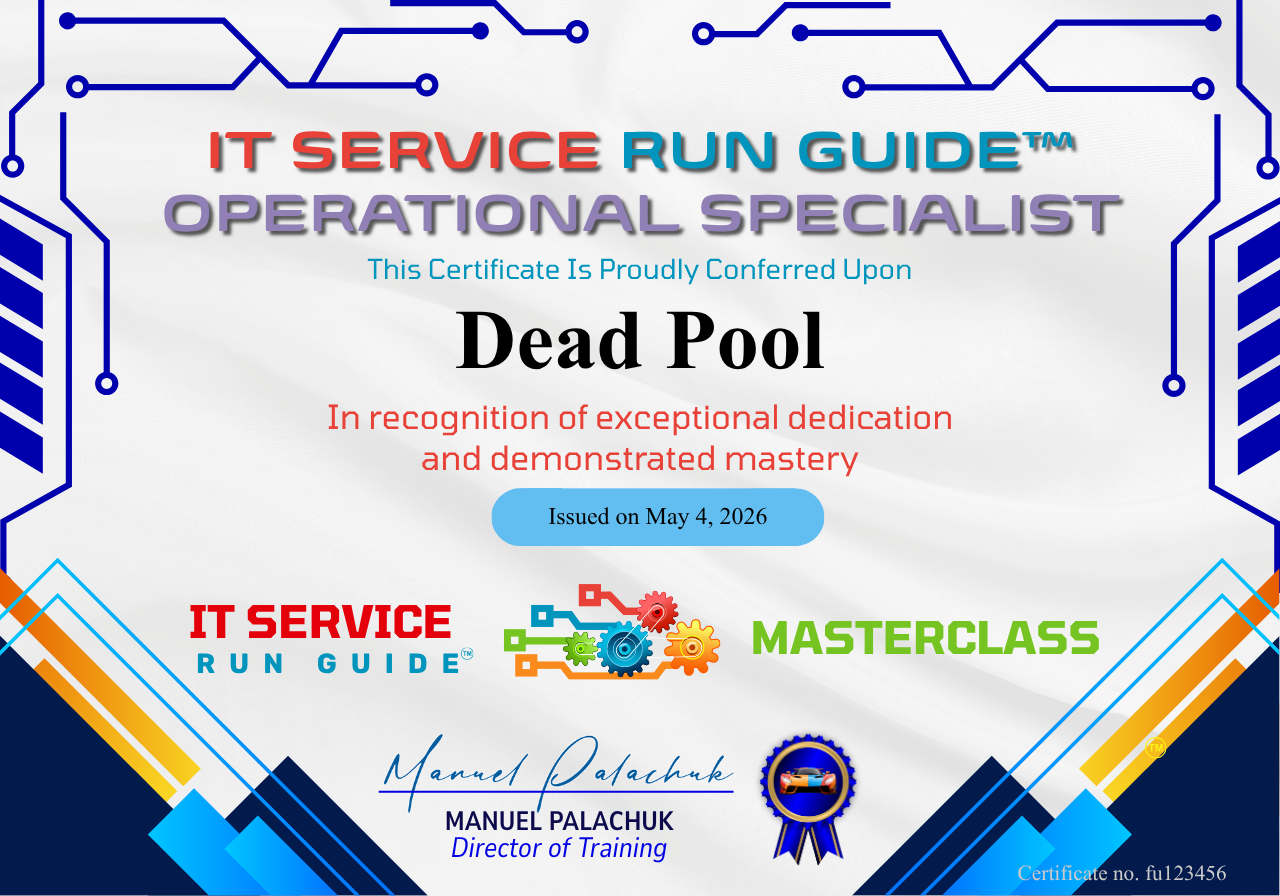
Operational Specialist Certificate
Issued to every technician who passes the module exams – named, dated, numbered, and signed. Something to put on the wall, not just a line on a résumé.
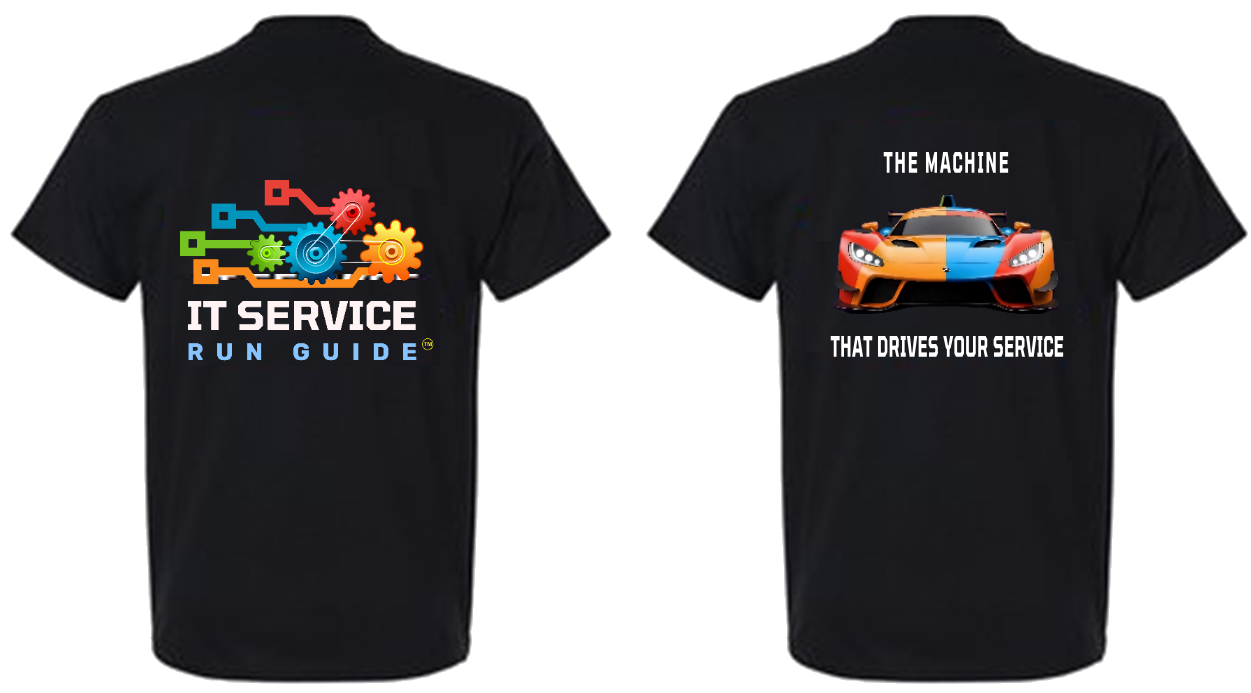
The ITSRG T-shirt
Every certified graduate gets the t-shirt. Team pricing makes it easy to gear up the whole desk when everyone earns it together.
MORE FROM TEAMS ON THE MACHINE

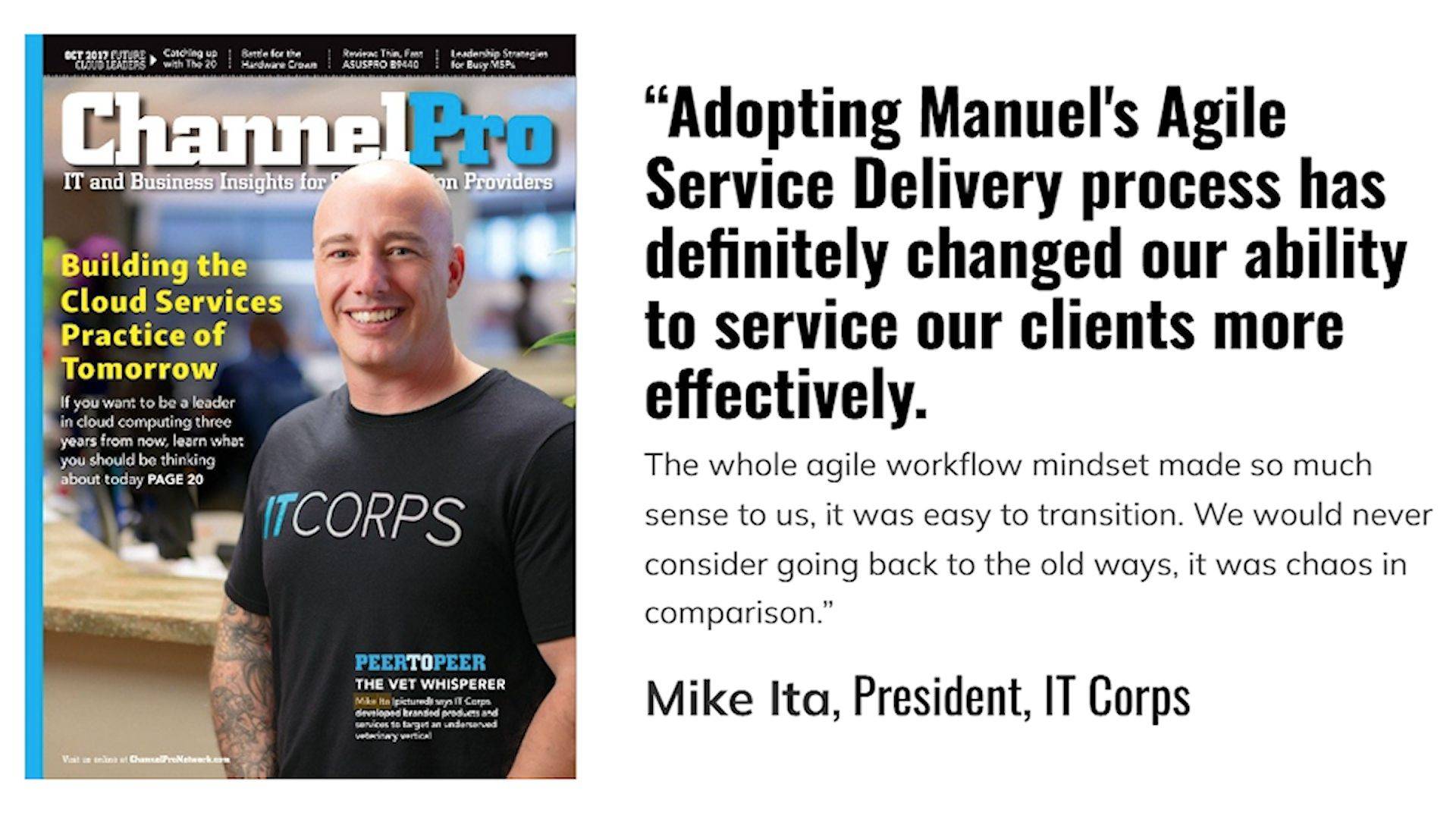
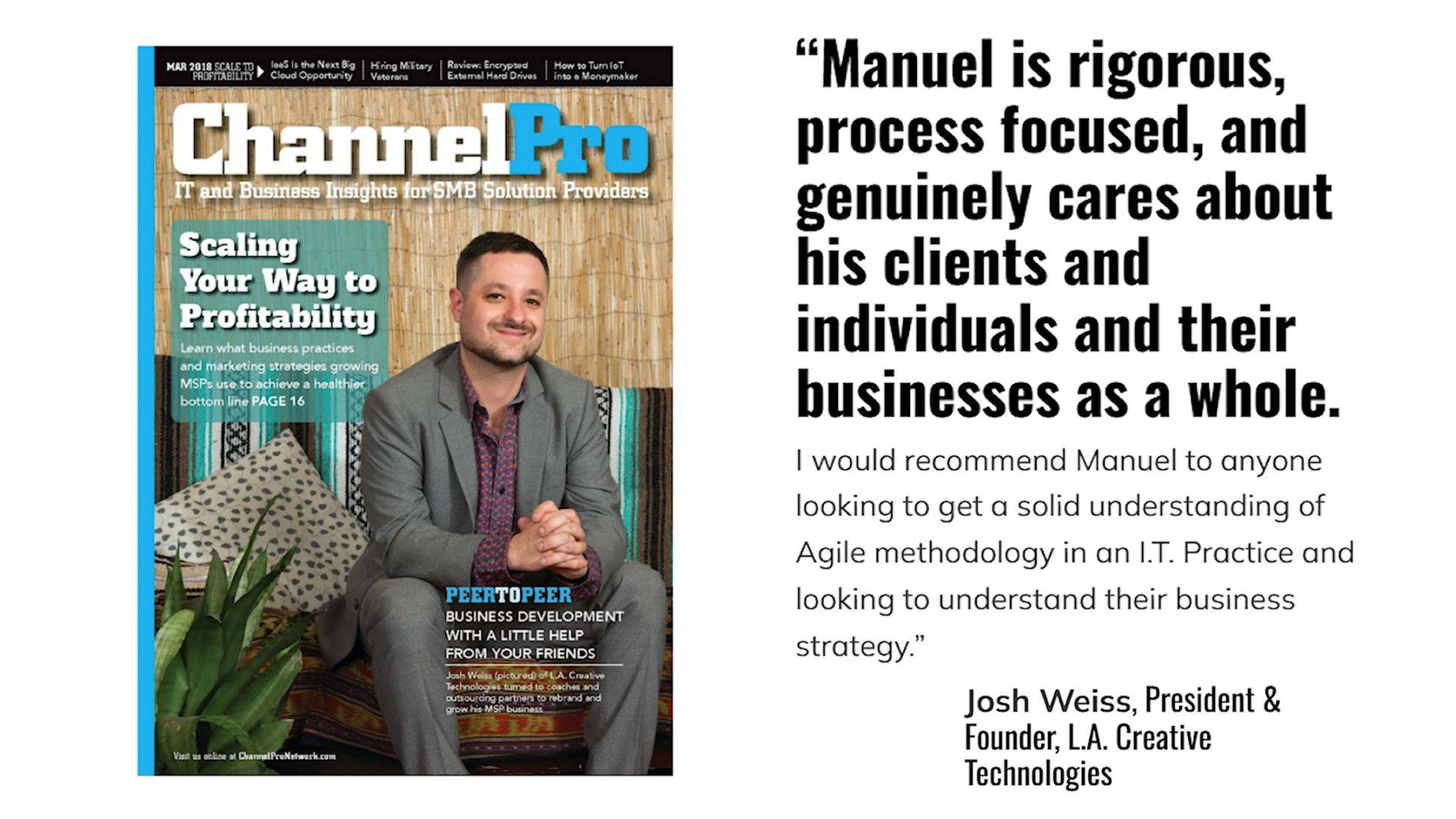
"Manny gave us the tools and skills required to understand how work flows through our organization. With this data, we were able to optimize the client and tech experience. He knows his sh!t and takes a no-b.s. approach to helping you accomplish your goals. He’s a great teacher and won’t have you make changes for change’s sake but rather to accomplish a real objective that will make your organization better."
-- Brian Curtis, President, DominionTech Computer Services
"Manny has been instrumental in transforming our business through his expertise in AGILE Service delivery processes. He provided us with a shared language and a set of KPIs that have streamlined our operations. Before Manny's intervention, we were struggling to keep up with our old service delivery system as our company expanded. Thanks to his guidance, we successfully scaled to serve 1,200 customers and grew to over 70 employees efficiently, and still growing! Manny’s expertise in AGILE processes is unparalleled, and the improvements we've seen in our business are a testament to his skill. Be ready for transformative change that will help you scale and succeed."
-- Reuben Kamp, CEO/Founder, Darkhorse Tech

RISK REVERSAL
My Hassle-Free Guarantee
If by the end of the second module or 14 days, whichever comes first...
- If this course is not shaping up to be absolutely practical...
- If it is not providing you everything you need to run your service desk on the ITSRG standard...
- If you're not convinced that implementing the ITSRG will transform your service delivery and team efficiency...
... then simply email us at ClientServices@ManuelPalachuk.com and we will refund you the next business day.
FAQ
Common Questions
How long do I have to complete the course?
Is this only for Managed Service Providers?
Why do I need the IT Service Run Guide™ as an IT Service Provider or internal IT team?
What are the CORE concepts of the IT Service Run Guide™ methodology?
How long will it take for my entire team to actually run on the ITSRG system?
How much will it cost to implement ITSRG beyond the cost of the training course?
Will my team actually change their ways and adopt the ITSRG methods?
We already have a PSA tool or Ticketing System — how hard will it be to tune it to the ITSRG system?
Does this course include Agile Service Delivery™?
How will adopting the ITSRG methods affect my customers and their user experience?
What if, after our team completes the course, we still need help getting ITSRG implemented completely?
How is this different from the standalone Ten Golden Rules or WaTTiRt trainings?
Do I need ITIL experience to take this course?
Do I own this course forever, or is access limited?
THE FULL TALLY
Everything, Add It Up
Core Certification — 9 Modules Plus Course Introduction
Every rule, workflow, and standard your service desk runs on — Ten Golden Rules™, Working & Tracking Time in Real-Time, the Service Delivery Framework, Escalation & De-escalation, Service Coordination, Metrics That Matter, and Technical Debt & The Nebulous Blob™. Over 120 lessons, each with a hard-gated comprehension assessment.
The Complete Toolkit — SOPs, Scorecards & Flowcharts
Every downloadable built into the course: the Ten Golden Rules™ Scorecard, WaTTiRt Maturity Evaluation, Priority & Escalation reference sheets, Board Coverage Matrix, Backlog Report & Metrics Spreadsheet, the Nebulous Blob™ Scatter Chart, and every poster and checklist across all 9 modules.
Ask Manny AI — Built Into the Course
Trained on the ITSRG methodology itself, so you get direct answers grounded in the framework — and help implementing what you learn — instead of generic AI guesswork, the moment you get stuck.
The ITSRG Implementation Scorecard
The master checklist your team works against, module by module, until the standard is actually running — not just understood.
Bonus Module — Adding Nitrox to Your Engine
Your bridge to the next course in the series — the Agile Service Delivery™ concepts that double throughput once your ITSRG foundation is in place.
Certification, Certificate & The ITSRG T-Shirt Escalation & De-escalation
Pass every module at 80% or better and walk away an IT Service Run Guide™ Operational Specialist — named, dated, numbered certificate, plus the shirt to prove it.
Total Value:
Over $8,897
Your Price Today
With Tiered Pricing, team rates run as low as $199 per seat.
Register Today Backed by the Hassle-Free Guarantee — full refund through Module 2 or 14 days, whichever comes first.
Stop Running Your Service Desk
on Heroics!
Get the complete IT Service Run Guide™ course – all Modules, the Implementation Scorecard, the certification, and the t-shirt. Backed by the Hassle-Free Guarantee.
IT Service Run Guide™ | © 2026 Manuel Palachuk International