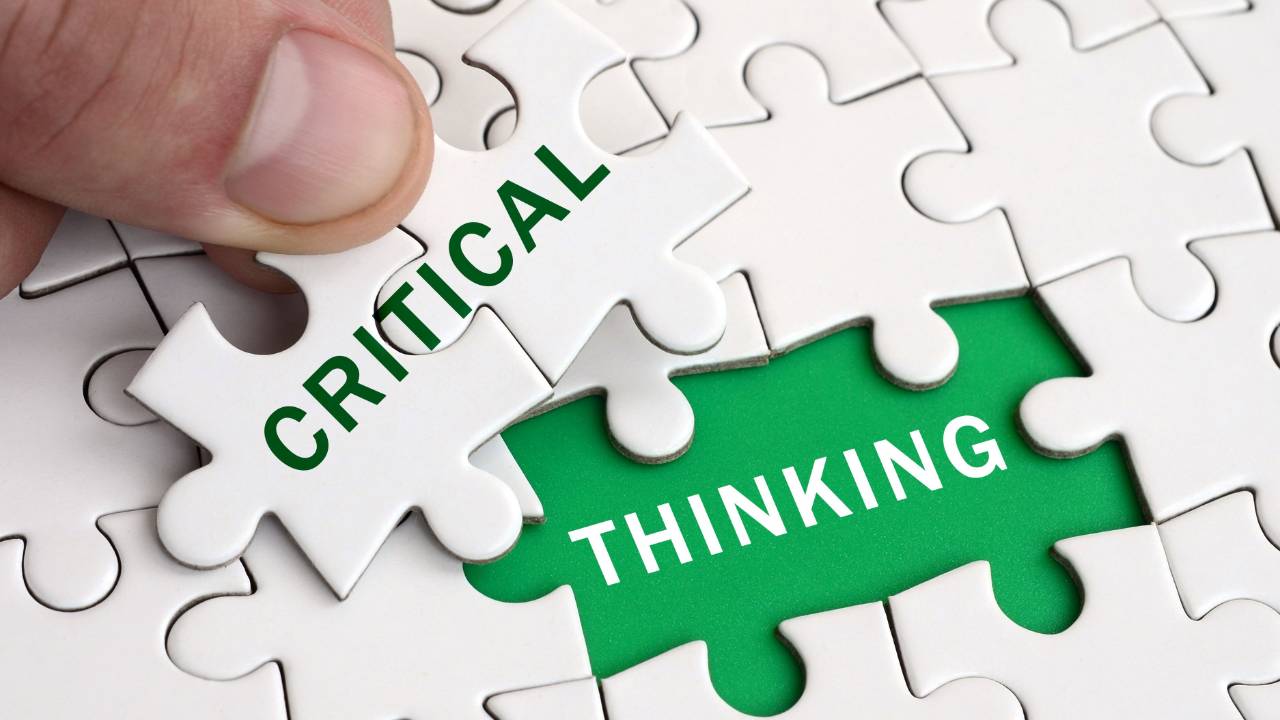
Critical Thinking Isn't a Personality Trait. It's a Process You're Probably Skipping.
Aug 18, 2026(Part 2 of a short series on essential business tools.)
Smart people screw this up constantly. Not because they lack intelligence, but because they mistake having an opinion for having done the work. Somebody arrives at a conclusion, feels good about it, and never stops to ask whether that conclusion was built on real evidence or built in a vacuum with nothing but confidence holding it up.
That gap – between feeling right and reasoning your way to a conclusion the evidence truly supports – is exactly what Critical Thinking as a formal tool is supposed to close. And if you're running a business, you don't get to skip it. Every level of the strategy you're building depends on your ability to work through problems, questions, and issues without fooling yourself along the way.
Why This Needs to Be a Tool, Not a Vibe
It might sound unnecessary to call out something as basic as "thinking critically" as a business tool. It's not unnecessary; it's essential. Left undefined, "critical thinking" becomes whatever an individual happens to believe critical thinking looks like, which usually means it looks a lot like their existing biases with better vocabulary.
What you need instead is a real process. A structure. Something your whole organization can rely on when an important problem shows up. And important problems show up constantly when you're actively building something instead of just maintaining it.
Critical thinking, properly defined, requires three things working together: the attitude of being genuinely open and willing to examine your own assumptions, the knowledge of basic methods for logical reasoning, and the skill to apply those methods when it counts. Most people have one or two of these. Almost nobody has cultivated all three on purpose.
The Five Phases
Here's the model, broken into five phases your team can run when something important lands on the table:
- Discover: Gather everything you can from every relevant, reliable source. Not just the sources that confirm what you already suspect.
- Analyze: Understand the assumptions, arguments, and evidence in front of you. Figure out how the pieces actually connect to each other, not how you wish they connected.
- Synthesize: Look for real logical relationships – where things genuinely support each other, and where they don't. Draw conclusions here, not before.
- Apply: Test your conclusions against the problem that started this whole process. A conclusion that sounds smart but doesn't hold up against the real situation isn't a conclusion, it's a guess with good posture.
- Justify: Update your beliefs and processes based on what you just learned. Make your inferences explicit, clarify what they truly mean going forward, and render a real judgment, not a hedge.
Where This Gets Used
This isn't an academic exercise for a philosophy seminar. This is the model your team should be running every time a real problem, question, or issue surfaces. Which – if you're actively building your business instead of coasting on it – is often. It sets the standard for how your organization handles hard calls, and that standard either gets set on purpose or gets set by accident. I know which one I'd rather have running my company!
The Coach’s Play Call
You don't need to formally announce, "We are now doing Critical Thinking!" in a team meeting. Trust me, that’s the fastest way to get eye-rolls. What you need instead is to notice, the next time a real decision is on the table, whether your team jumped straight to a conclusion or actually worked the five phases. If it's the former, that's not a people problem. That's a process gap. And process gaps are the easiest kind to fix, once you know they're there.
That's the whole game: Not being smarter, but being more disciplined about how you get to smart choices.
Next up in this series: Two tools that work together to turn a big goal into daily, executable action, and the gut-check that keeps you from committing to a plan that was never going to work in the first place.
Image by Mehaniq41| Envato

Don't miss a beat!
Sign up for my Success Newsletter an you'll receive periodic emails to update you when there is a new posts to the "Hot Cup of F#@K All That", “Pages From The Coach’s Playbook”
We hate SPAM. We will never sell your information, for any reason.